Grease Monkey Wipes made a big impact on Shark Tank Season 1. Tim Stansbury and Erin Whalen, the creators, pitched their product to the Sharks in 2006. They wanted $40,000 for 40% of their company.
These wipes were made to clean tough grease and grime easily. Their Shark Tank appearance was a turning point for their business. It led to many ups and downs in their journey.
Grease Monkey Wipes quickly became popular, selling 7,600 units in a few months. This success brought in $7,400 in revenue, with each packet at $1. The company’s pitch to stores was successful 75% of the time. Also, 40% of those stores ordered more.
Key Takeaways
- Grease Monkey Wipes sought $40,000 for 40% equity on Shark Tank
- The product was designed for portable cleaning of grease and grime
- Early sales showed promising results with 7,600 units sold
- The company had a 75% success rate with retail outlets
- Robert Herjavec and Barbara Corcoran made a joint offer
- The business was later acquired by Beaumont Products in 2014
The Birth of Grease Monkey Wipes
Grease Monkey Wipes came from a real problem faced by co-founder Erin Whalen. The idea for these wipes started during an unexpected moment.
A Problem Identified During a Bike Ride
Erin Whalen had a tough experience on a 100-mile bike ride. After fixing a flat tire, her hands were covered in stubborn grease. She had no way to clean them.
This experience showed her a need for a portable cleaning solution. It was a problem many people faced.
Tim Stansbury and Erin Whalen’s Innovative Solution
Tim Stansbury and Erin Whalen teamed up to solve this problem. They created Grease Monkey Wipes. This product was made to remove tough grease in various situations.
They wanted to help cyclists, mechanics, and others with unexpected messes.
Addressing the Need for Portable Cleaning
Grease Monkey Wipes filled a big gap in the market. It offered a convenient way to clean grease when other options weren’t available. This solution quickly became popular among outdoor lovers and professionals.
| Product Feature | Benefit |
|---|---|
| Portable design | Easy to carry during outdoor activities |
| Effective formula | Removes tough grease and grime |
| Versatile use | Suitable for various situations and industries |
Product Features and Benefits

Grease Monkey Wipes are a big deal in the world of cleaning. They are citrus-based and great at removing grease. Each wipe is 10 inches by 12 inches, big enough to cover a lot of area.
These wipes are not just for mechanics. Cyclists, chefs, and DIY fans also love them. Their natural citrus formula is safe and works well, making them great for many places.
- 30% stronger than traditional wipes
- Removes heavy grease, oil, lubricants, adhesives, ink, paint, dirt, and grime
- Multi-purpose and disposable for on-the-go convenience
- Safe, natural citrus-based formula
After Shark Tank, Grease Monkey Wipes sold over $500,000 in their first year. This success led to more stores carrying them. Now you can find them at AutoZone, O’Reilly Auto Parts, bike shops, and hardware stores.
These wipes are perfect for anyone with greasy hands. They are strong, big, and made from natural ingredients. Grease Monkey Wipes are a top choice for quick and reliable cleaning on the go.
Grease Monkey Wipes Shark Tank Appearance
Tim Stansbury and Erin Whalen made a big splash on Shark Tank in Season 1. They asked for $40,000 for 40% of their company, Grease Monkey Wipes. This moment was a game-changer for their business, leading to rapid growth.
The Pitch
Stansbury and Whalen started by talking about what makes Grease Monkey Wipes special. They showed how portable and effective the wipes are at cleaning tough grease. Their excitement was clear as they talked about changing the way we clean on the go.
Product Demonstration
The best part was when they showed how the wipes work. Stansbury and Whalen demonstrated the wipes’ power by cleaning different greasy messes. The Sharks were amazed as the wipes quickly got rid of tough stains. This hands-on demo made a big impact.
Investor Reactions
The Sharks had mixed but mostly positive reactions. They liked how well the wipes cleaned and the cool logo. Kevin O’Leary, however, questioned the lack of patent protection. This sparked a lively debate about the product’s market potential.
“This is a product that solves a real problem. I can see the potential here,” remarked one of the Sharks during the pitch.
The Shark Tank appearance was a turning point for Grease Monkey Wipes. The entrepreneurs’ passion and a strong product demo caught the Sharks’ attention. This opened doors to new investment opportunities.
Sales and Market Performance
Grease Monkey Wipes hit the market with a bang, thanks to strong early sales. Their unique approach to cleaning quickly won over both customers and retailers.
Early Sales Figures and Pricing Strategy
In a short time, Grease Monkey Wipes sold 7,600 units, making $7,400. They priced each packet at $1, making it affordable for many. This price helped the product quickly become popular.
Success with Retail Outlets
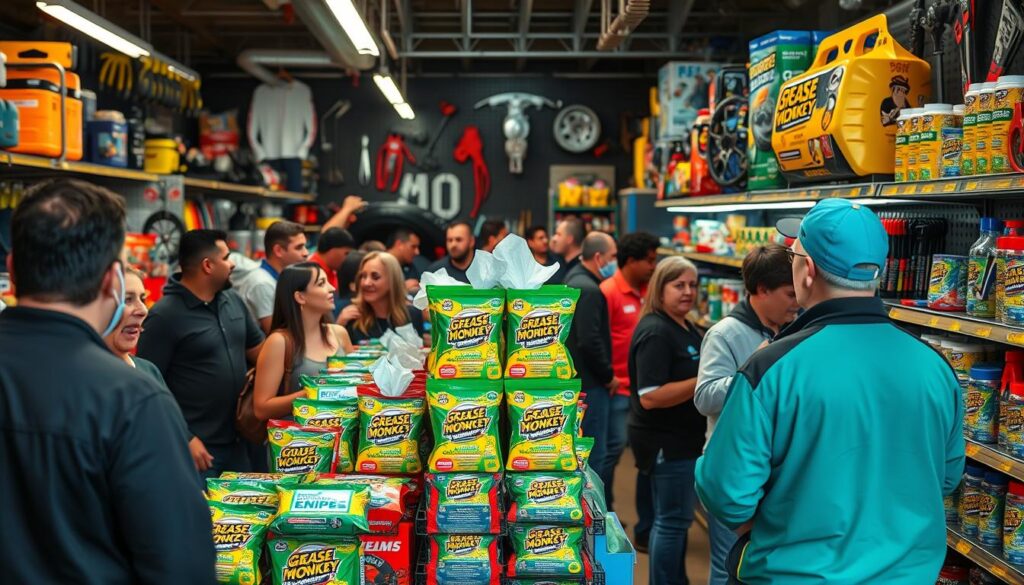
The company did well in retail. When they pitched to new stores, they got a 75% yes rate. This showed that retailers believed in the product’s future.
Re-order Rates and Challenges
40% of stores that first sold Grease Monkey Wipes ordered more. This was a good sign of customer happiness and loyalty. Yet, the company faced issues figuring out long-term re-order rates because it was still new.
| Metric | Performance |
|---|---|
| Units Sold | 7,600 |
| Gross Revenue | $7,400 |
| Price per Packet | $1 |
| Retail Pitch Success Rate | 75% |
| Re-order Rate | 40% |
Shark Tank Deal Negotiations
The negotiations for Grease Monkey Wipes on Shark Tank were intense. Daymond John liked the branding but chose not to invest. Kevin O’Leary and Kevin Harrington didn’t invest, worried about uniqueness. Barbara Corcoran first said no but then changed her mind. Robert Herjavec was impressed but had doubts about the financials.
Concerns about the product’s uniqueness were a big issue. The Sharks wondered if it could stand out in a crowded market. Yet, the entrepreneurs’ passion caught their attention.
These negotiations showed how tough Shark Tank deals can be. Like all 14 episodes in Season 1, this one was a real test of business skills. The Sharks made decisions without any prior knowledge, making each pitch a challenge.
| Shark | Initial Reaction | Final Decision |
|---|---|---|
| Daymond John | Praised branding | Declined to invest |
| Kevin O’Leary | Concerned about uniqueness | Passed on the deal |
| Kevin Harrington | Questioned proprietary content | Did not invest |
| Barbara Corcoran | Initially declined | Reconsidered later |
| Robert Herjavec | Impressed by presentation | Concerned about financials |
The Grease Monkey Wipes pitch was on Episode 113, aired on January 15th, 2010. It drew 4.43 million viewers. This episode showed how popular the show was becoming, with people eager to see new business ideas.
Robert Herjavec and Barbara Corcoran’s Joint Offer
The Grease Monkey Wipes pitch on Shark Tank became exciting when Robert Herjavec and Barbara Corcoran teamed up. Their offer surprised the entrepreneurs, leading to a tense negotiation.
Initial Hesitation and Final Decision
Robert Herjavec started with a $40,000 offer for 40% equity. This was the same amount the founders asked for, but with a twist – double the equity. Barbara Corcoran was impressed and suggested working together with Robert.

Terms of the Accepted Deal
After thinking it over, Tim and Erin agreed to the deal. They accepted Robert and Barbara’s offer for a combined 40% stake for $40,000. This partnership brought not just money but also the Sharks’ expertise to Grease Monkey Wipes.
The deal’s effects were quick. In a few months, Grease Monkey Wipes sold 7,600 units, making $7,400. This success proved the Sharks’ investment was wise and set the stage for more growth.
Post-Shark Tank Success Story
Grease Monkey Wipes’ story on Shark Tank shows the power of TV and smart growth. Their journey after the show was amazing.
Rapid Investment Repayment
After Shark Tank, Grease Monkey Wipes saw a big jump in sales. The $40,000 from Robert Herjavec and Barbara Corcoran was a turning point. Unlike some, they quickly paid back their investors, proving their product’s value and the founders’ skills.

Season 2 Update Segment
The show’s producers were impressed, leading to a Season 2 update. This segment showed Grease Monkey Wipes’ growth and solidified their Shark Tank success.
Tim Stansbury, a co-founder, took full control of the company. He bought out the Sharks and his co-founder, Erin Whalen. This move helped focus leadership and decisions, boosting the company’s success.
| Aspect | Details |
|---|---|
| Initial Investment | $40,000 for 40% equity |
| Compared to Season Average | Lower than 47.2% average investment |
| Post-Show Growth | Rapid sales increase |
| Ownership Changes | Tim Stansbury became sole owner |
Grease Monkey Wipes’ story shows how Shark Tank, a great product, and smart strategies can lead to big success in startups.
Business Evolution and Ownership Changes
In November 2014, Grease Monkey Wipes’ journey changed. The founder sold the brand to Beaumont Products, Inc. for a secret amount. This sale was a big step for the company’s growth, letting the founder start new projects.
After selling, the founder started Cat5 Elite, a cycling clothes company. Though it didn’t match Grease Monkey Wipes’ success, it showed the founder’s love for cycling innovation.
The sale to Beaumont Products kept Grease Monkey Wipes on the market. This shows how Shark Tank products can grow even after changing hands. It proves the brand’s strength and its chance for lasting success.
FAQ
What inspired the creation of Grease Monkey Wipes?
What are the key features of Grease Monkey Wipes?
What deal were Tim Stansbury and Erin Whalen seeking on Shark Tank?
What were the early sales figures and pricing strategy for Grease Monkey Wipes?
FAQ
What inspired the creation of Grease Monkey Wipes?
Erin Whalen had trouble cleaning grease off her hands during a 100-mile bike ride. She needed a portable and effective cleaning solution. This led her and Tim Stansbury to create Grease Monkey Wipes.
What are the key features of Grease Monkey Wipes?
Grease Monkey Wipes are citrus-oil based cleaning wipes. They are designed for single use. They effectively remove stubborn grease stains from hands and body. They are perfect for mechanics, chefs, and anyone needing quick cleanup.
What deal were Tim Stansbury and Erin Whalen seeking on Shark Tank?
They pitched Grease Monkey Wipes on Shark Tank Season 1. They sought ,000 for 40% equity in their company.
What were the early sales figures and pricing strategy for Grease Monkey Wipes?
Grease Monkey Wipes sold 7,600 units in a few months. This generated ,400 in gross revenue. Each packet was priced at
FAQ
What inspired the creation of Grease Monkey Wipes?
Erin Whalen had trouble cleaning grease off her hands during a 100-mile bike ride. She needed a portable and effective cleaning solution. This led her and Tim Stansbury to create Grease Monkey Wipes.
What are the key features of Grease Monkey Wipes?
Grease Monkey Wipes are citrus-oil based cleaning wipes. They are designed for single use. They effectively remove stubborn grease stains from hands and body. They are perfect for mechanics, chefs, and anyone needing quick cleanup.
What deal were Tim Stansbury and Erin Whalen seeking on Shark Tank?
They pitched Grease Monkey Wipes on Shark Tank Season 1. They sought $40,000 for 40% equity in their company.
What were the early sales figures and pricing strategy for Grease Monkey Wipes?
Grease Monkey Wipes sold 7,600 units in a few months. This generated $7,400 in gross revenue. Each packet was priced at $1.
What concerns did the Sharks raise during the pitch?
Kevin O’Leary worried about the lack of patent protection. Robert Herjavec was concerned about the financial numbers.
What deal did Tim Stansbury and Erin Whalen ultimately accept?
After initial hesitation, Robert Herjavec and Barbara Corcoran offered $40,000 for 40% equity. This offer was accepted.
How did Grease Monkey Wipes perform after Shark Tank?
Grease Monkey Wipes saw significant success after Shark Tank. They quickly repaid the investment. The company’s success led to an update segment in Season 2.
What happened to the ownership of Grease Monkey Wipes?
Tim Stansbury eventually bought out both the Sharks and his co-founder, Erin Whalen. In November 2014, he sold the company to Beaumont Products for an undisclosed amount.
.
What concerns did the Sharks raise during the pitch?
Kevin O’Leary worried about the lack of patent protection. Robert Herjavec was concerned about the financial numbers.
What deal did Tim Stansbury and Erin Whalen ultimately accept?
After initial hesitation, Robert Herjavec and Barbara Corcoran offered ,000 for 40% equity. This offer was accepted.
How did Grease Monkey Wipes perform after Shark Tank?
Grease Monkey Wipes saw significant success after Shark Tank. They quickly repaid the investment. The company’s success led to an update segment in Season 2.
What happened to the ownership of Grease Monkey Wipes?
Tim Stansbury eventually bought out both the Sharks and his co-founder, Erin Whalen. In November 2014, he sold the company to Beaumont Products for an undisclosed amount.